
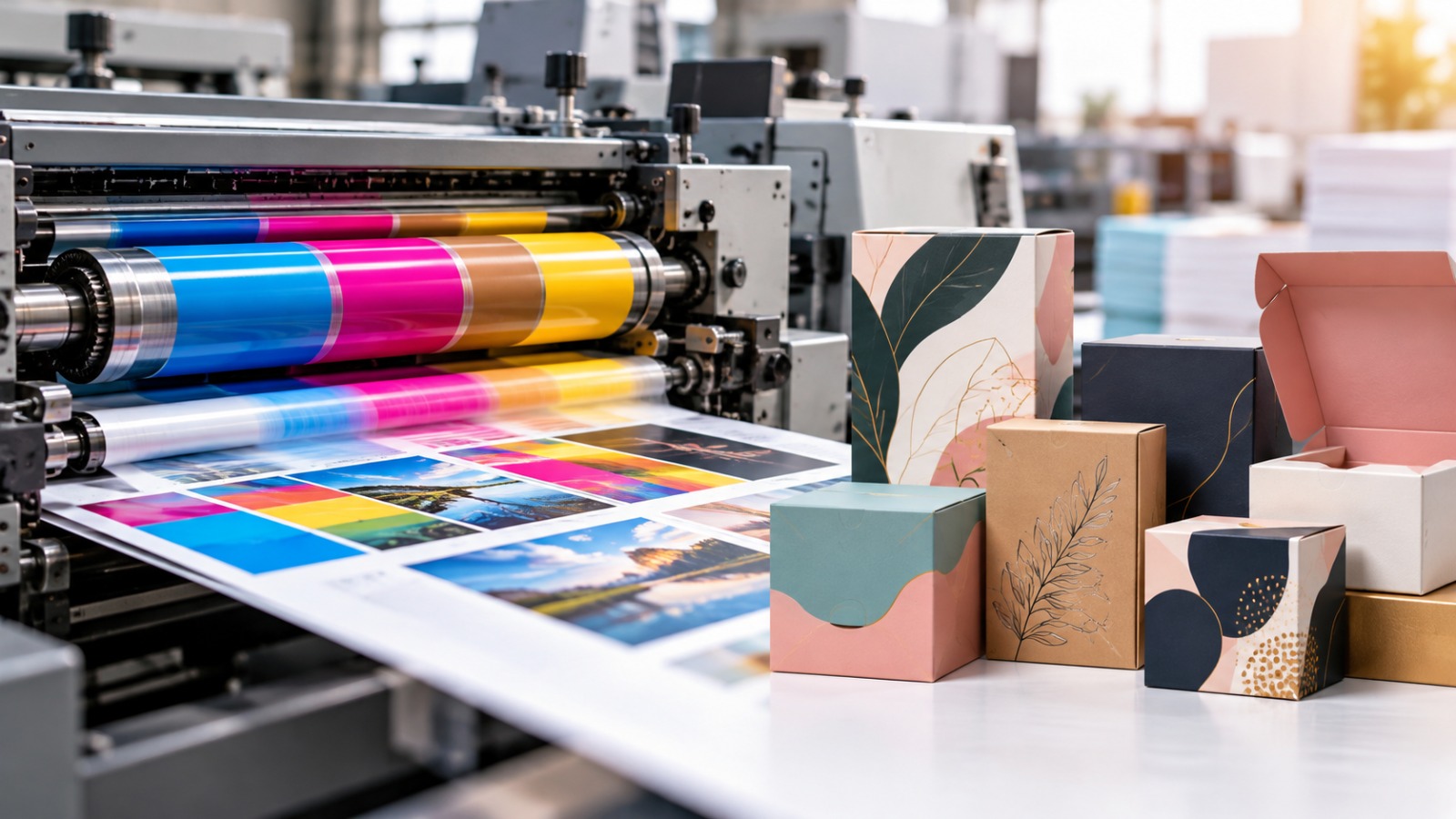
Understand Offset Printing: A Simple Overview
Still having trouble understanding offset printing? Wondering it’s the best way to package your product, how it affects print quality or whether it’s worth the investment?
You are not alone. With appearance, durability, and cost in mind, selecting the right printing method can feel daunting.
The most amazing thing is that you are not required to be an expert to understand offset. With a basic understanding of how offset printing works, what materials are used and where it works best, it is much easier to select the right packaging solution.
What is Offset Printing?
Offset printing is also known as offset lithography. It is a printing process that transfers ink from a metal plate to a rubber blanket and then to paper or cardboard.
This method takes the image and transfers it onto the surface and then onto the material. Instead of printing directly from the plate to the material, it creates a clean and consistent print result.
For companies, offset printing is an effective option to create packaging that is consistent with bulk orders. Whether it is vibrant cosmetic boxes or meticulously crafted product cartons, it aids brands in showcasing their products in a refined and recognizable way.
How does Offset Printing Work? A Step-by-Step Guide
Although the term seems technical, it is much easier to understand when simplified into easy steps.
Preparing the Design:
The first step to a successful print job is a good design. Your packaging artwork features graphics, colors, instructions, images, brand name and other key elements.
Prior to printing, the artwork is reviewed for accuracy of size, resolution, bleed and color settings. This is a critical step in the packaging process as it ensures the design is consistent with the folds, panels, and cutting lines of the box.
2. Making of Printing Plates:
After approval of the design, it is then transferred onto the specially prepared plates. To make each color separate, you need a plate of your own. For instance, a regular 4- colour CMYK print has 4 plates: cyan, magenta, yellow and black.
Each of these plates contains image information which is passed to the printing surface. The correct preparation of plates yields consistent results and sharp details over the entire production run.
3. Transferring Ink to the Rubber Blanket:
This is where the name offset comes from. The printing plate is used to transfer the image to a rubber blanket. Then, the image is transferred from the blanket to the paper or cardboard.
The rubber surface helps the ink transfer evenly, including the areas with slight surface variance in the printing material. This helps to achieve smooth color coverage, great detail in graphics and clean text, which are hallmarks of offset printing.
4. Printing the Colors:
During printing using a CMYK printing plate, the four process colours are printed on four different printing units. They can be mixed to create a variety of colors, photos, gradients and more design elements.
The printer precisely manages ink coverage, alignment and colour balance during the run. So, when hundreds or thousands of boxes must have the same look then, this is quite important.
5. Drying and Finishing the Printed Sheets:
Once printed, the sheets are treated with the proper drying or curing. The application process varies according to the type of ink, coating, material and printing equipment used.
Further finishes can then be added, such as protection coating, lamination, embossing, or foil stamping.
They may alter the visual and tactile characteristics of the packaging and offer various advantages, including protection of the surface or enhanced handling resistance.
6. Assembling the Boxes:
Printing is just a segment of the packaging production process. Upon completion, the sheets are cut with dies to the correct shape and are ready for folding and assembly. The printed panels are positioned in the box layout to place logos, product information and graphics in their proper place.
The outcome is to provide packaging that is engaging, pleasing and has the necessary functionality to enclose, protect and showcase a product.
Understanding the CMYK ink and why does it matter?
You may have heard the term CMYK when you have ever spoken to a packaging supplier about printing. It is one of the most important ideas to grasp when understanding how to design a printed box.
CMYK is a colour system based on four colour inks:
- Cyan: Blue-green colour.
- Magenta: A reddish-purple colour.
- Yellow: A bright yellow color.
- Black: For strong dark areas, text, and added contrast.
Different proportions of these inks can be mixed together to create a wide spectrum of colors and images. This means that when it comes to packaging design, which involves product photos, colorful illustrations, gradients and many design elements, CMYK is helpful.
How CMYK Improves Your Packaging Design?
Suppose you have a brand of cosmetics that you would like to launch. Photos, soft colors in the background, product information and a colorful brand logo are part of your packaging design.
So, these elements can be combined on the same printed surface without using a separate ink just because of CMYK printing.
It is particularly useful for:
- Detailed product photos: Creating photorealistic images and complex drawings.
- Colorful branding: Printing designs using multiple colors and color gradients.
- Retail packaging: Designing eye-catching carton boxes for retail display.
- Repetitive production: Production of the same approved design in a large quantity.
What is an SBS paperboard and how is it related to Offset printing?
Solid Bleached Sulfate (SBS) is an excellent quality paperboard of premium grade, typically used for folding cartons.
It is made from bleached chemical pulp and has a smooth, white surface, which is good for printing fine details. It is commonly coated on one side (C1S), while two-side coated boards (C2S) are also available in the paperboard market. For these reasons, it became the top selection for offset printing.
Why should brands choose SBS for printed boxes?
It is a popular packaging choice because of its surface suitability for clear graphics and bright colors.
SBS paperboard possesses several beneficial properties:
- A smooth printing surface: Supports fine text, logos and detailed artwork.
- A clean white background: Helps to enhance bright colors and contrast.
- Premium look: Ideal for brands seeking a sophisticated retail look.
- Flexible applications: Can be made into a variety of folding cartons.
What are the best packaging materials for offset printing?
The printing method and material of the packaging should be coordinated. However, even a wonderful design won’t produce the desired result if the target surface is not appropriate for the printing process. There are many other applications for offset printing. Some suggestions are below:
Packaging Material
Its Advantages
Best For
SBS (C1S) Coated One side Paperboard
Smooth, coated printing surface on one side.
Cosmetics cartons, pharmaceutical boxes and retail packaging.
SBS (C2S) Coated two sides Paperboard
Coated surfaces on both sides, ideal for detailed printing inside and out.
Premium gift cartons, luxury products and packaging with interior graphics.
Kraft Paperboard
Its natural, earthy look makes it suitable for simple packaging designs.
Kraft boxes, bakery items and other lifestyle products.
What Are the Benefits of Offset Printing for Custom Packaging?
One of the reasons why offset printing is popular is for its ability to create more than just an appealing design. When ordered properly, It also helps to ensure consistency of branding and production efficiency.
- Excellent Print Detail
Fine lines, detailed drawings, high-quality photographs and sharp text can all help create a professional packaging design. It is particularly crucial for products with small instructions, ingredients and detailed branding in their packaging.
- Cost-efficient at higher volumes
There is an initial investment involved in offset printing, as plates must be created and the press set up. But the more the design is produced, the more the initial costs are distributed. This means that the cost per box can sometimes go down.
- Consistent colors over large orders
If the settings and ink levels are controlled, offset printing can produce a consistent colour and image throughout a production run. This uniformity lets customers know that they’re getting the same packaging from a brand that they’re familiar with.
- Support for Premium Finishes
The printing method of offset printing can be used in combination with finishing methods that give the packaging a sense of more appealing.
For Example:
- Lamination: alters surface appearance and offers matte or gloss finishing.
- Foil stamping: Impresses a metallic finish on logos or specific areas of designs.
- Embossing and debossing: Impresses parts of the design to create texture.
- Spot UV: Coats select areas to create a contrast effect.
What makes Keystone Boxes the best choice for packaging?
Selecting the right printing method is important but it is equally important to have the right packaging partner who understands your product and brand vision.
From the initial concept to the final product, Keystone Boxes can assist businesses in making their packaging dreams come true and deliver them such packaging that matches their quality and presentation goals.
So, from retail products to cosmetics, food products to high-end gifts, the combination of the right material, printing, and finishing will always make a difference. Discover our custom packaging options to choose the best match for your product that will create a long lasting impression.
Frequently Asked Questions About Offset Printing
What is the use of offset printing?
Folding cartons, paperboard packaging, brochures, labels and printed products are examples of products produced through offset printing. In packaging, it is very convenient for making repeated designs at medium and large-scale production.
Which printing method is better, offset or digital?
Both approaches have their own advantages and disadvantages. In some cases, offset printing is the preferred method for large print runs, when colour control is a key consideration. Digital printing is also more practical for small-scale printing, prototypes and packaging that changes frequently.
Is offset printing costly?
Offset printing involves upfront printing plate and set-up costs, which can increase the upfront expenses for small orders. But for larger quantities of orders, these costs are spread over more boxes and, in many cases, can be cheaper per unit.
Does offset printing support premium packaging finishes?
Yes. There are a variety of finishes that can be used with offset-printed packaging, such as foil stamping, embossing, debossing, matte lamination and spot UV. Options are available depending on material, design and production set-up.
How many boxes do I need to order for offset printing?
There is no minimum for each supplier. As with offset printing, the more you order, the less it costs, though the minimum order size varies based on setup costs, box size and number of designs.
How long does offset printing take?
The timeline depends upon various factors such as order quantity, the design of elements and the complexity of the overall project. But with proper planning and synergy, the whole process will be smooth and efficient.